Application of CRS to Sound
This is among the jointworks with Yuki Yamamoto, a graduate student of the Joint Graduate School of Math Innovation.
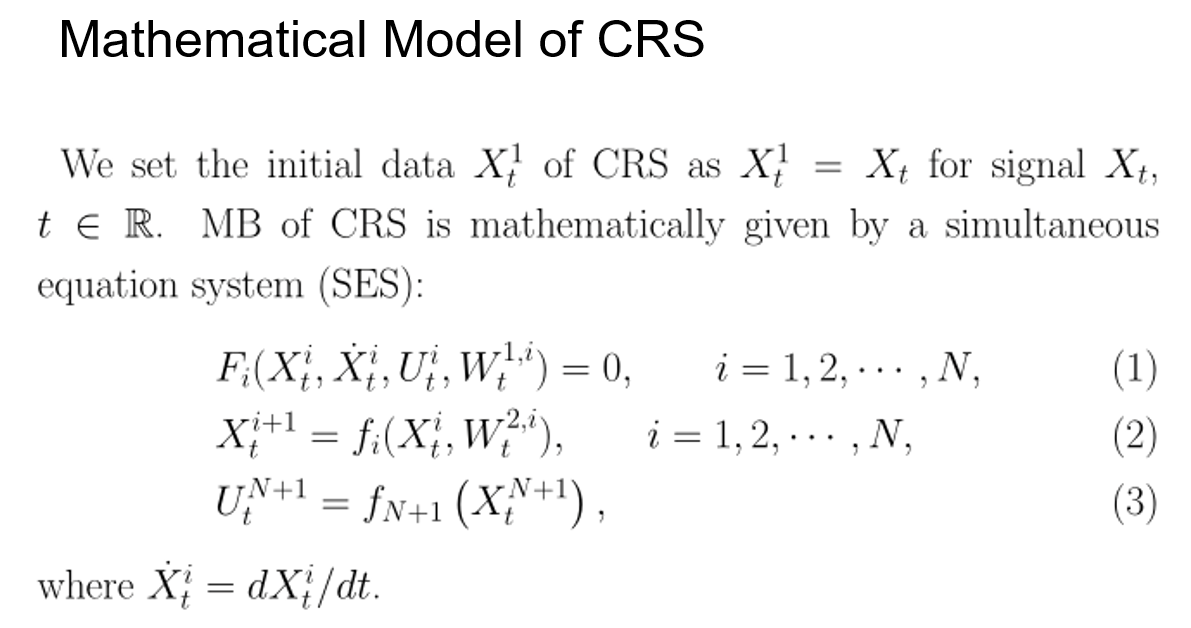
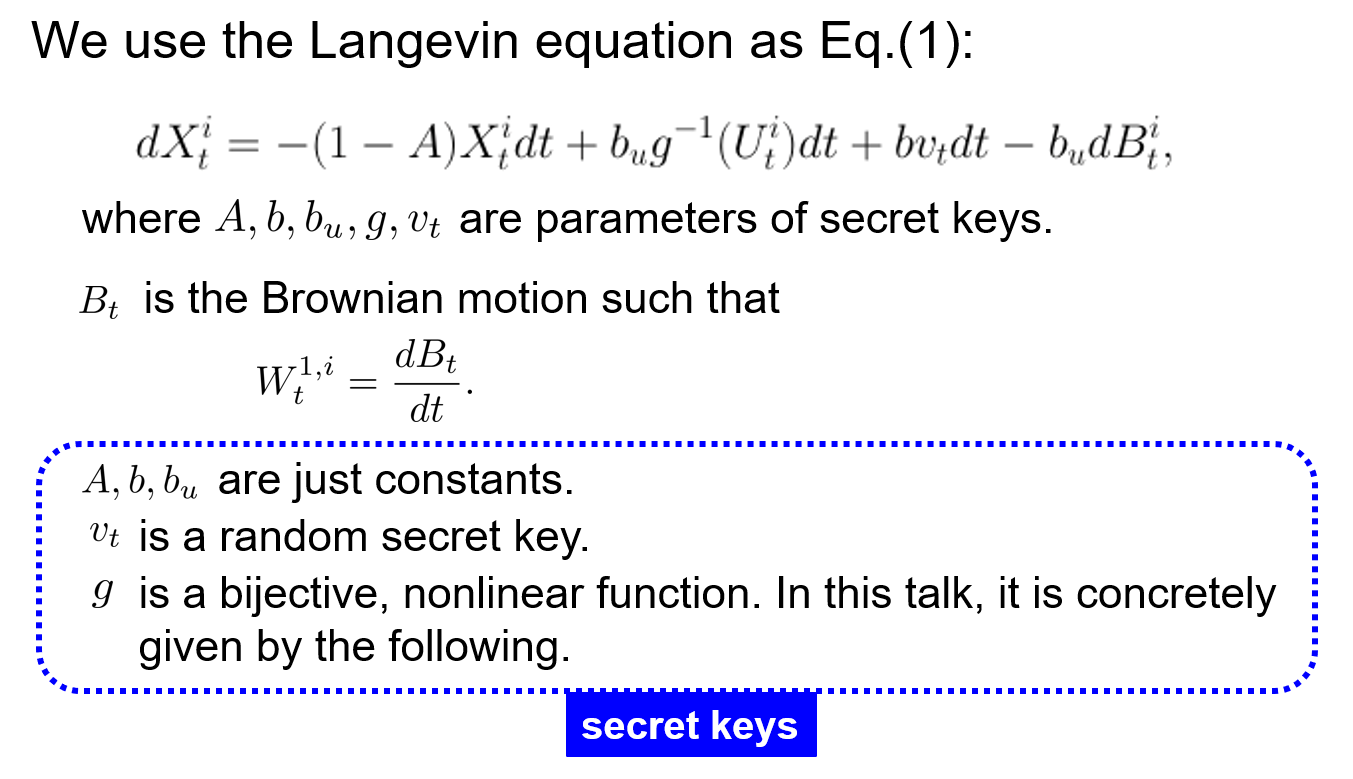
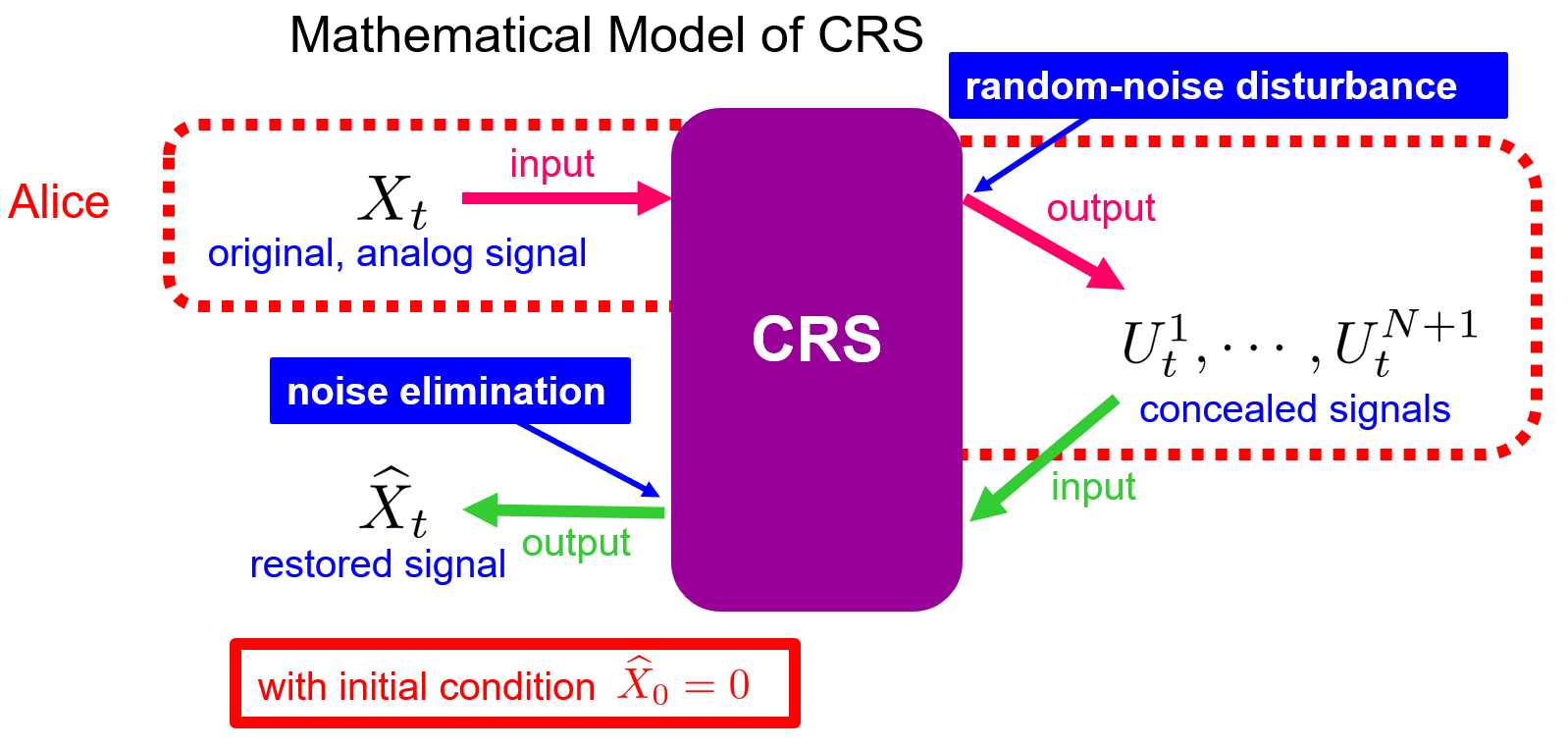
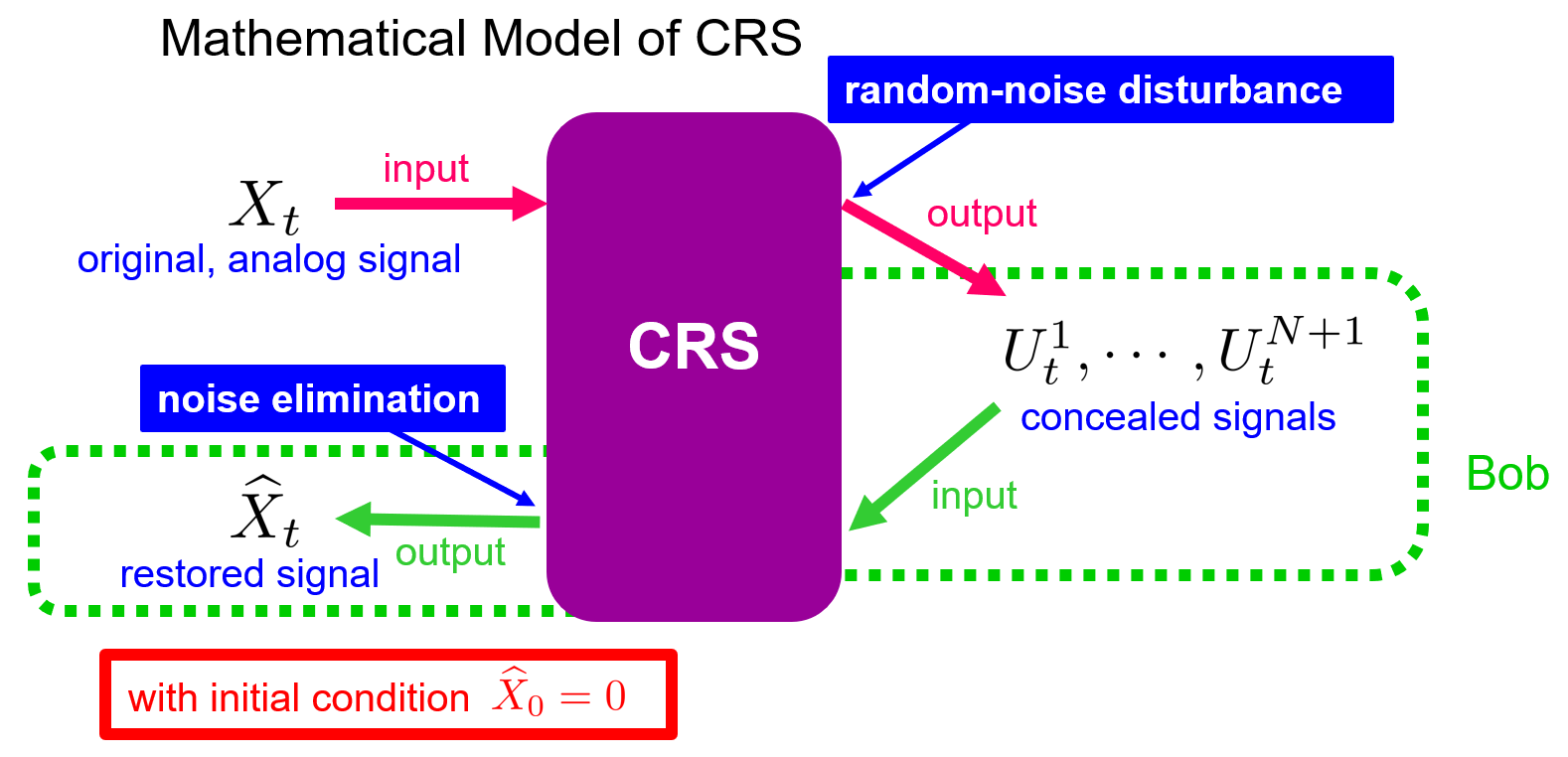
These 2 pictures are for the brief explanation of CRS.
 .
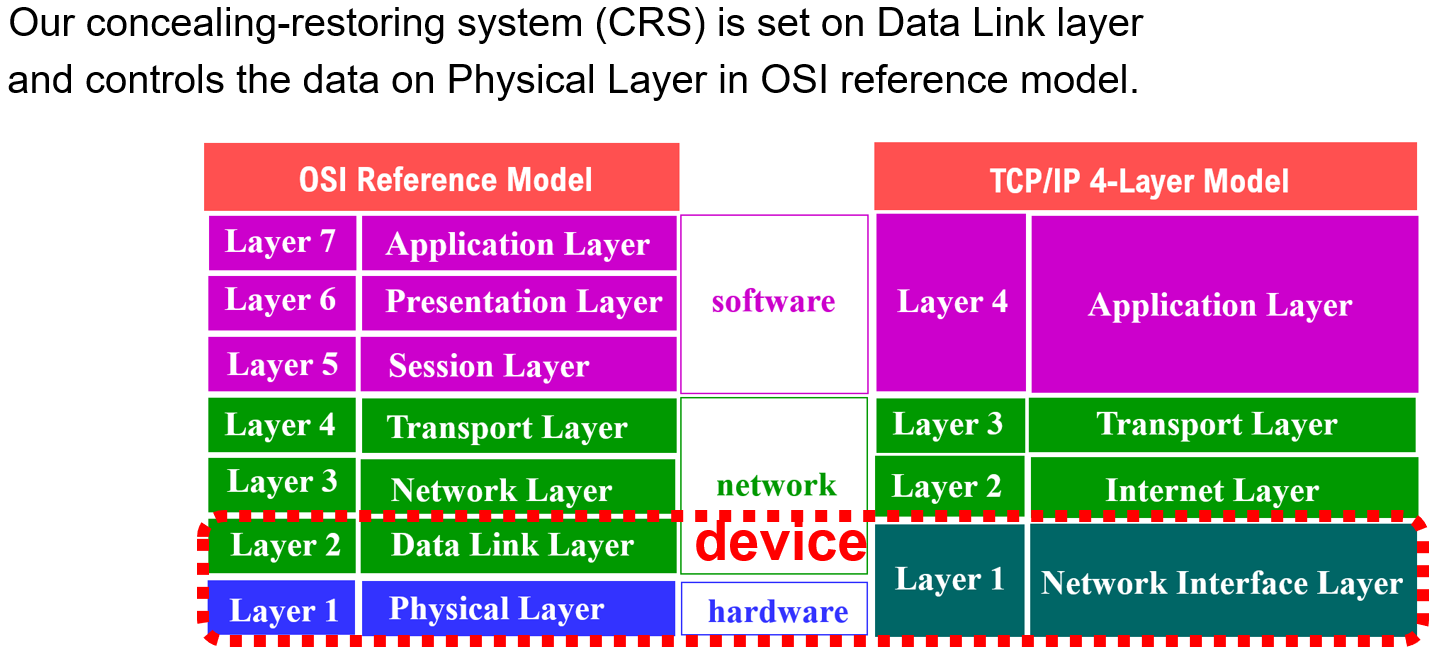
CRS is the concealing-restoring system for data (i.e., signals) on the physical layer of the OSI reference model.
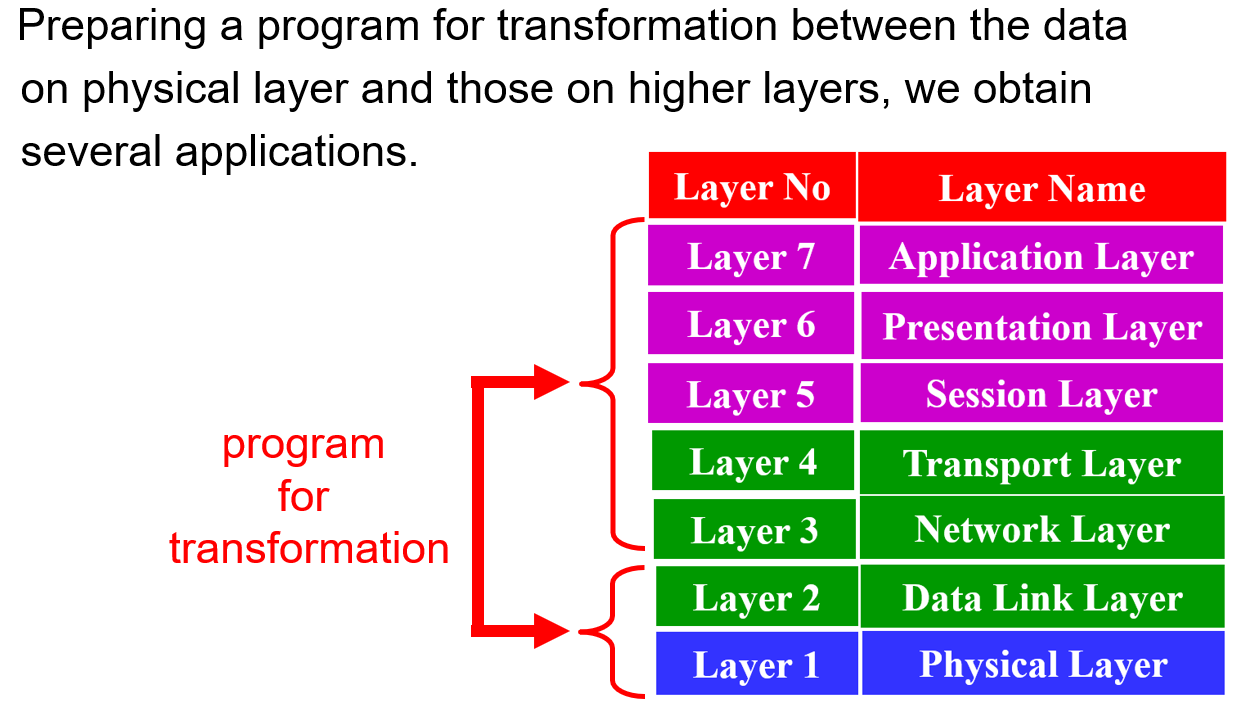
Since the data on the physical layer are most fundamental, you can conceal and restore the data on a higher layer with CRS provided you prepare the translation program between the data on the physical layer and the data on that higher layer.
We consider the sound of a music as the data on the higher layer below. So, we think the signals below are the data on the physical layer of the OSI reference model.
Our secret keys of CRS are the common keys consisting of several types of keys. In this CRS, the non-linear function g serves as the most powerful secret key. When the eavesdropper, Eve, is an AI model, the system induces overfitting because Eve must estimate numerous parameters that function as the secret key.
In the following we consider only three parameters but g. Let us suppose that Alice wants to conceal the sound of the music `Variations on a Theme of Corelli' (Op.42 composed by S. Rachmaninov in 1931) using CRS.
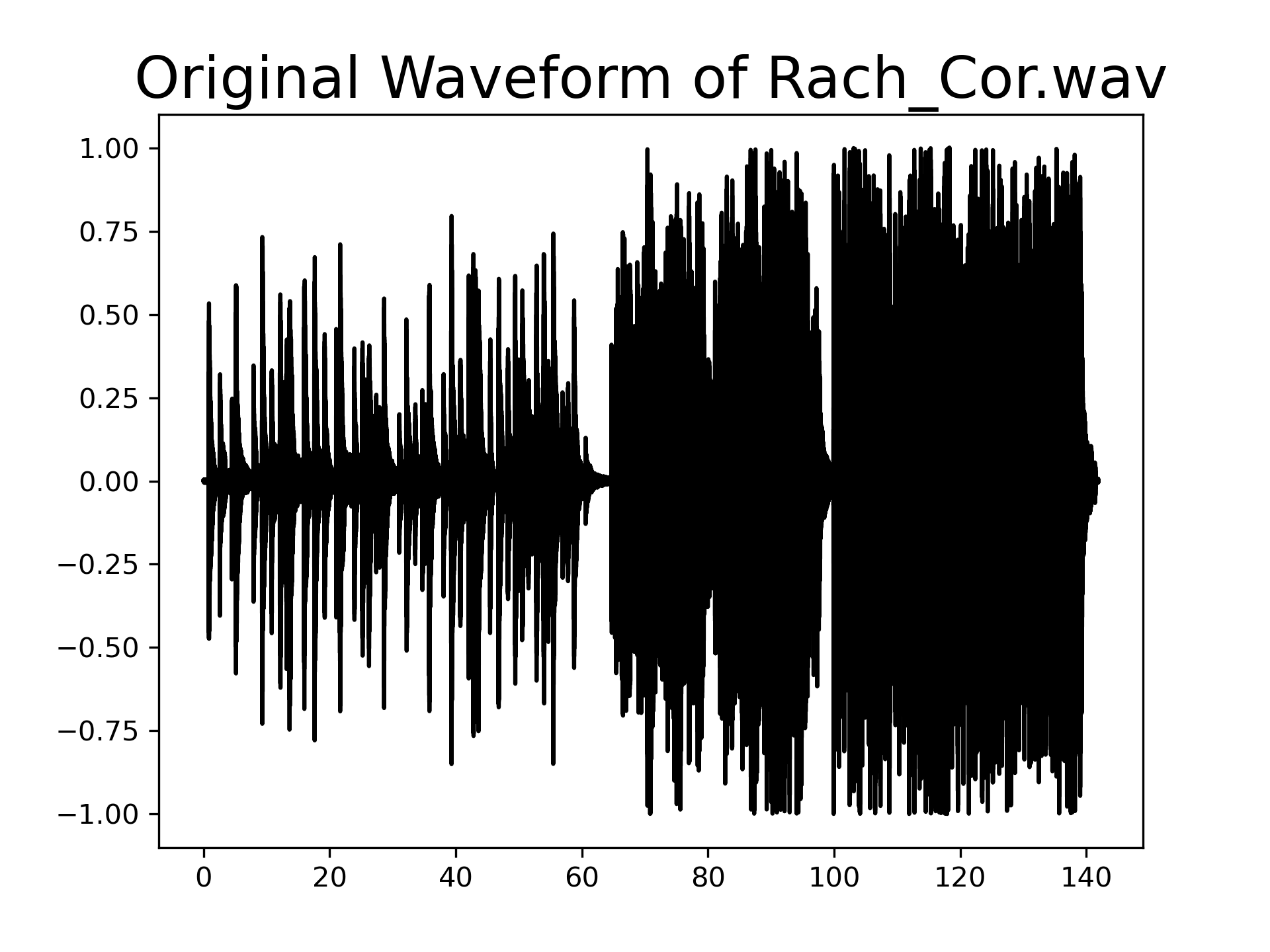 .
Alice sets N, the parameter of CRS, as N=2. So, she conceals the sound of that music and obtains the 3 concealed signals by CRS.
 .
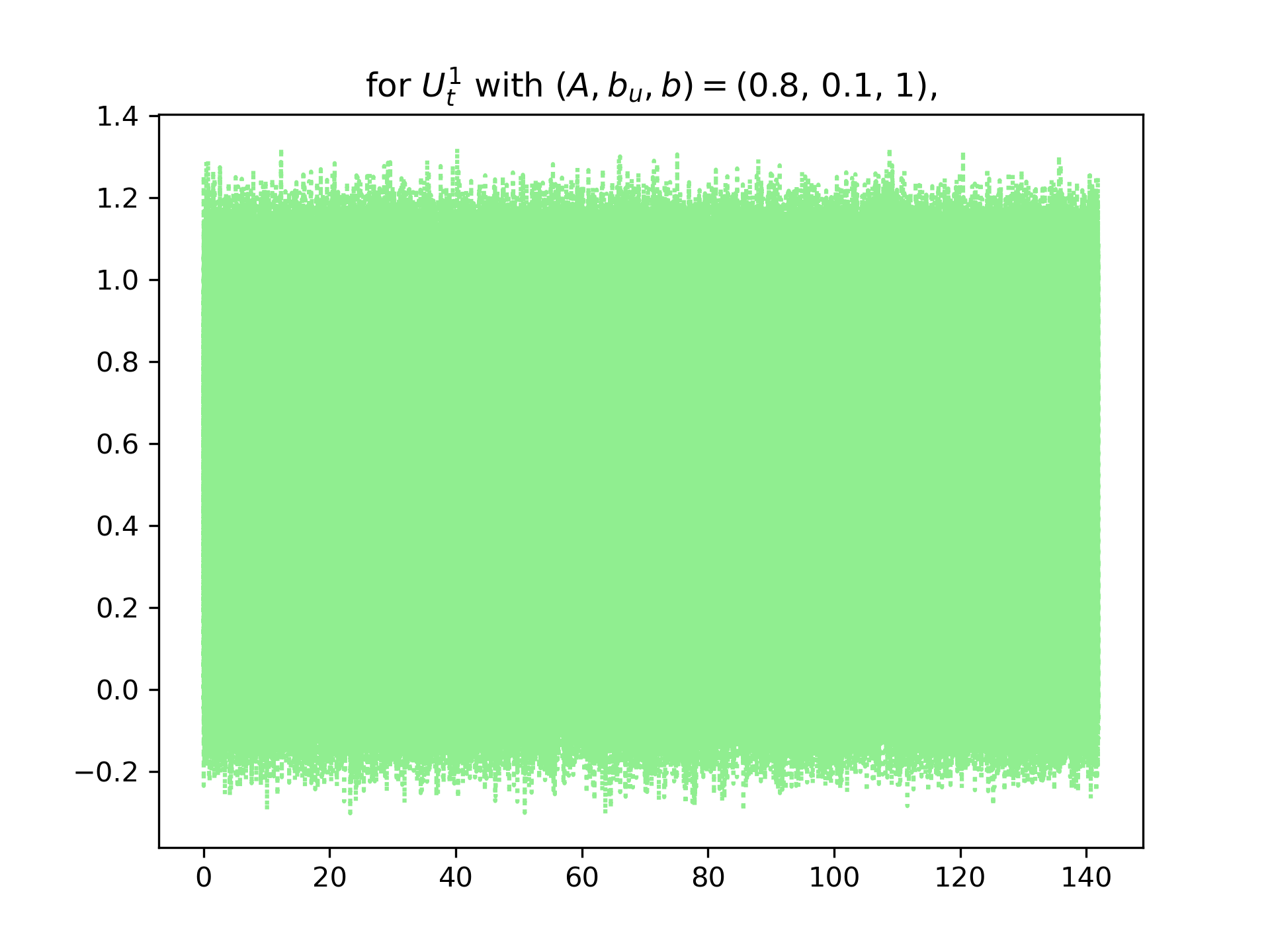
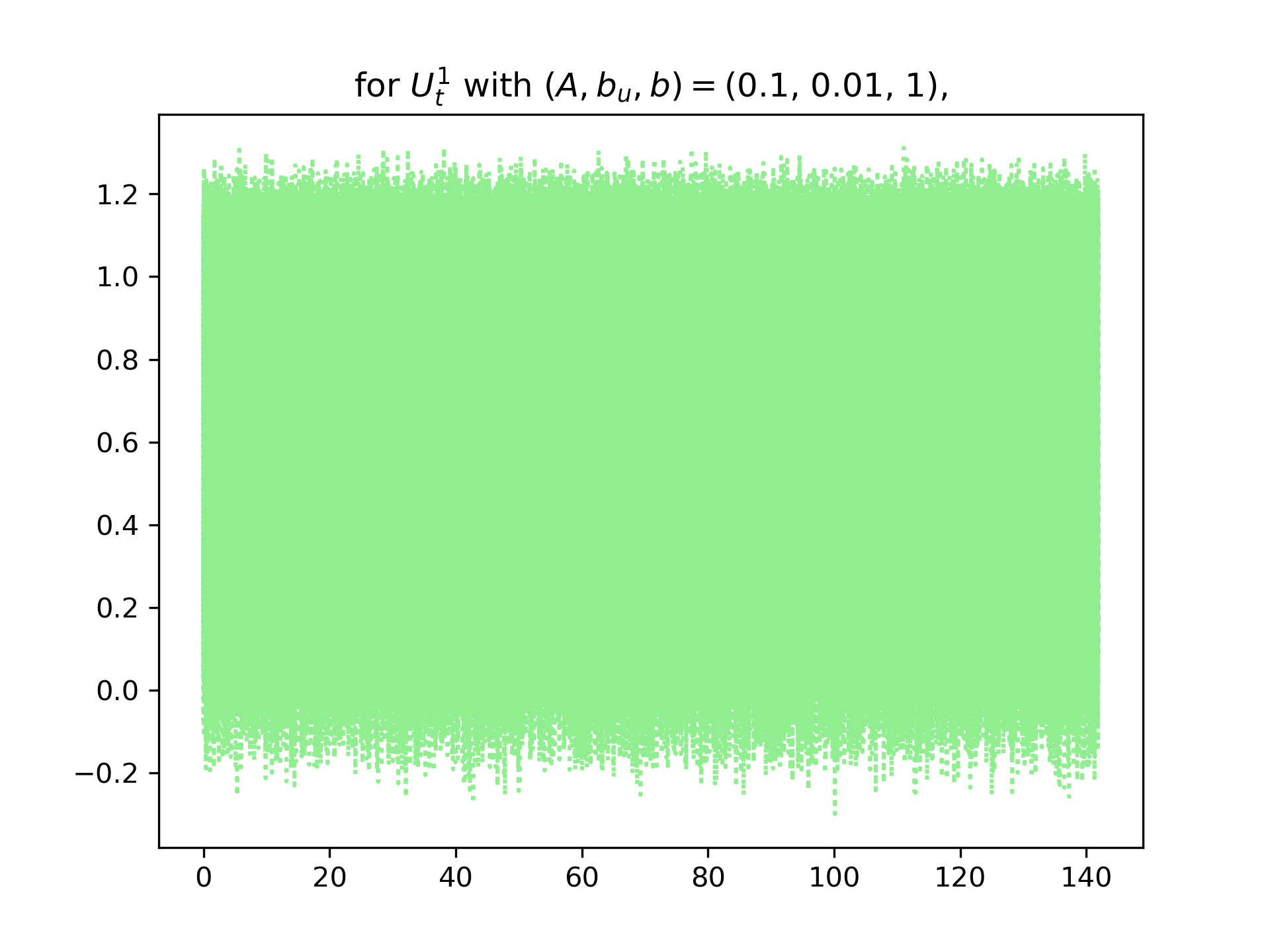
For each sets of parameters, the 1st concealed signal for the original signal of the music respectively has the waveform,
 .
 .
 .
The 2nd concealed signal for the original signal of the music respectively has the waveform,
 .
 .
 .
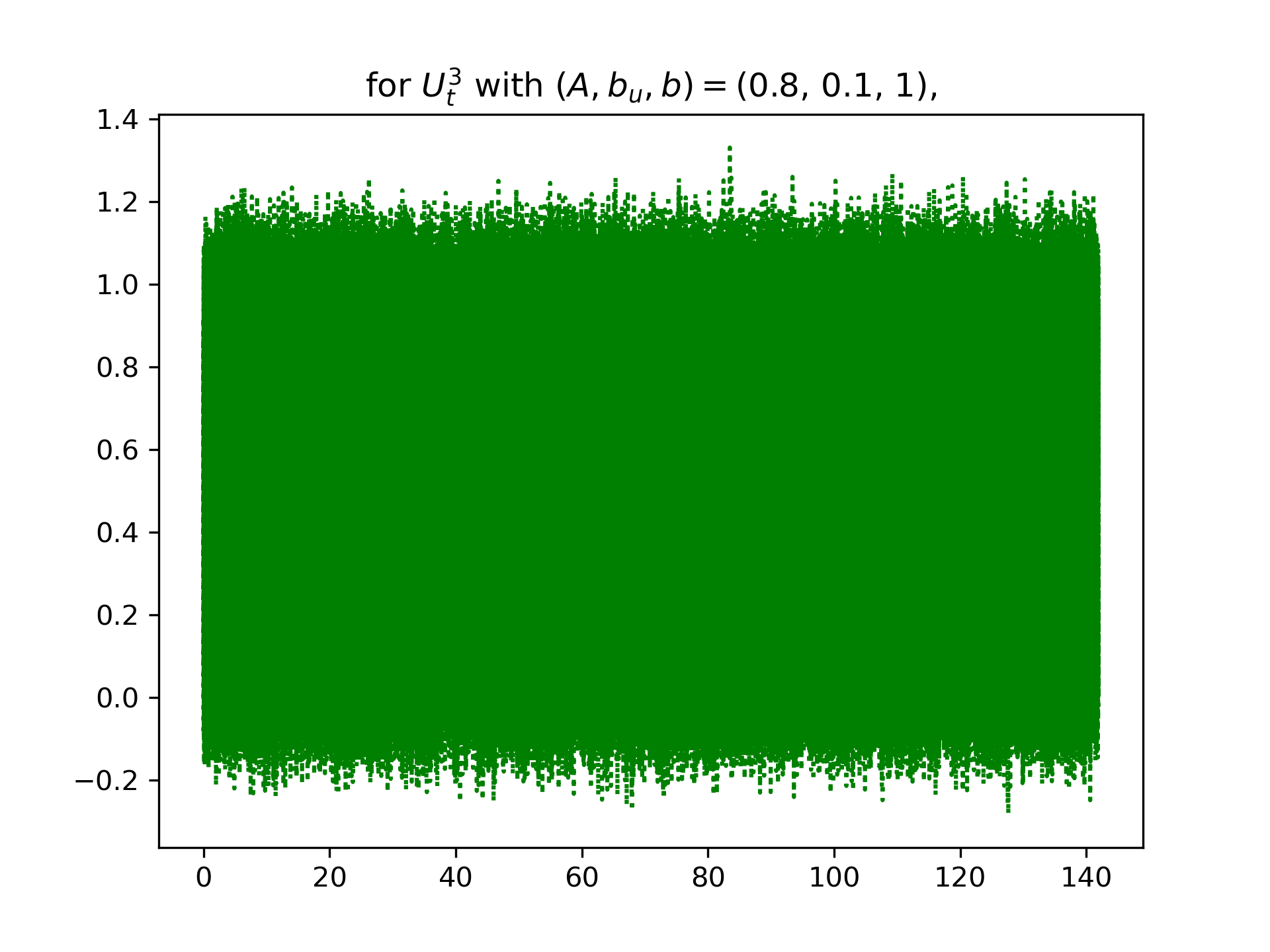
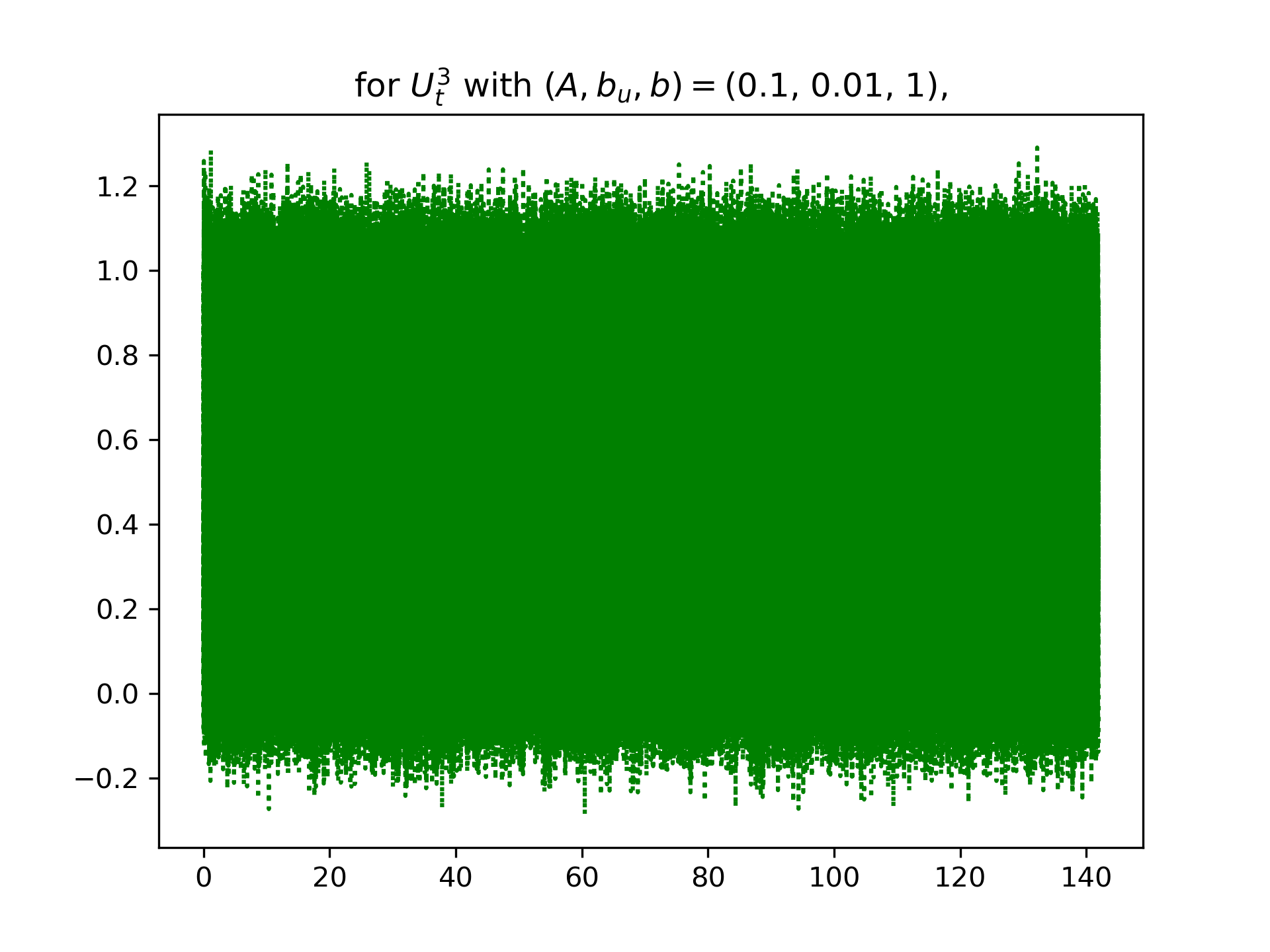
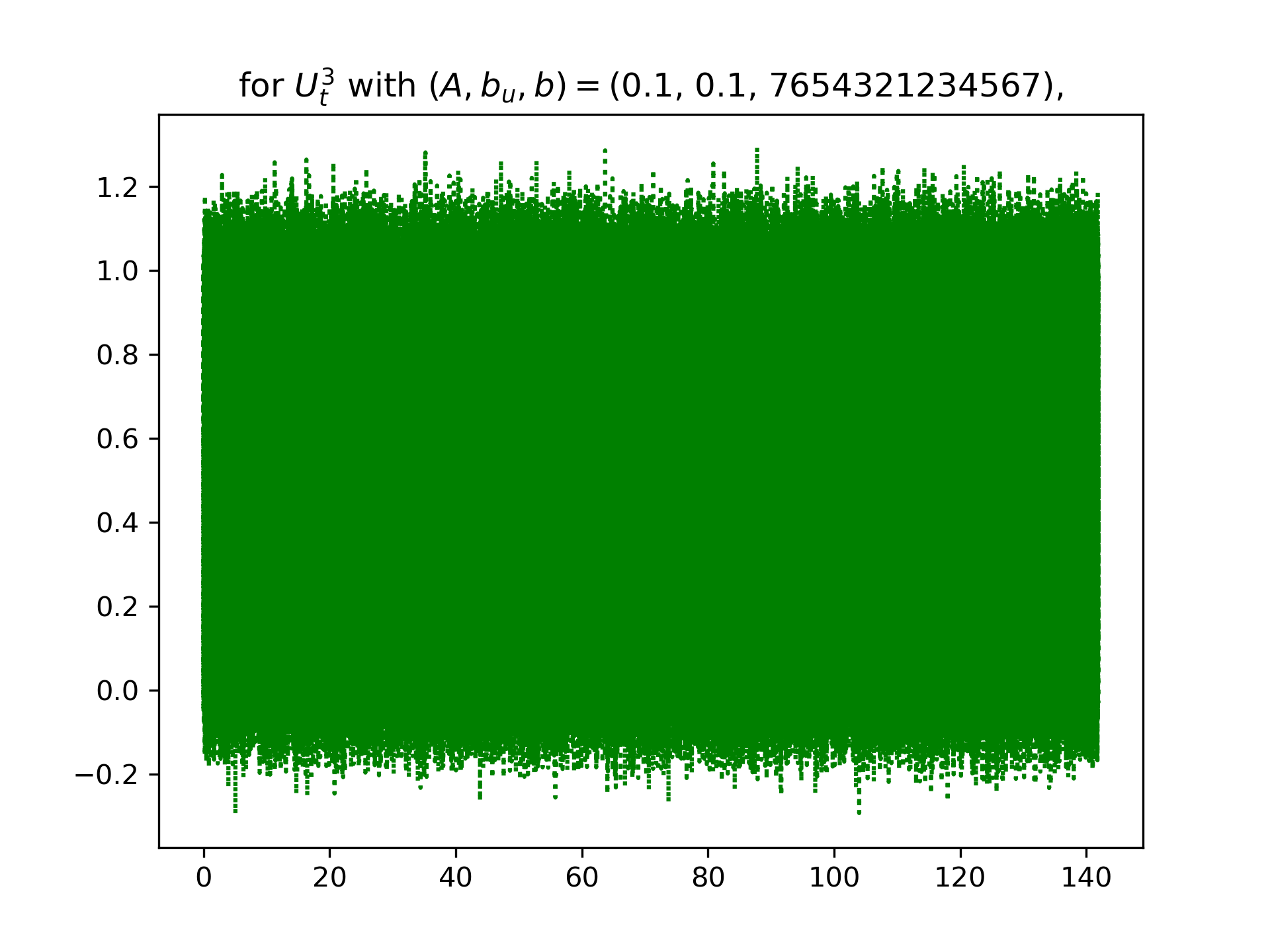
The 3rd concealed signal for the original signal of the music respectively has the waveform,
 .
 .
 .
She sends these 3 concealed signals to Bob.
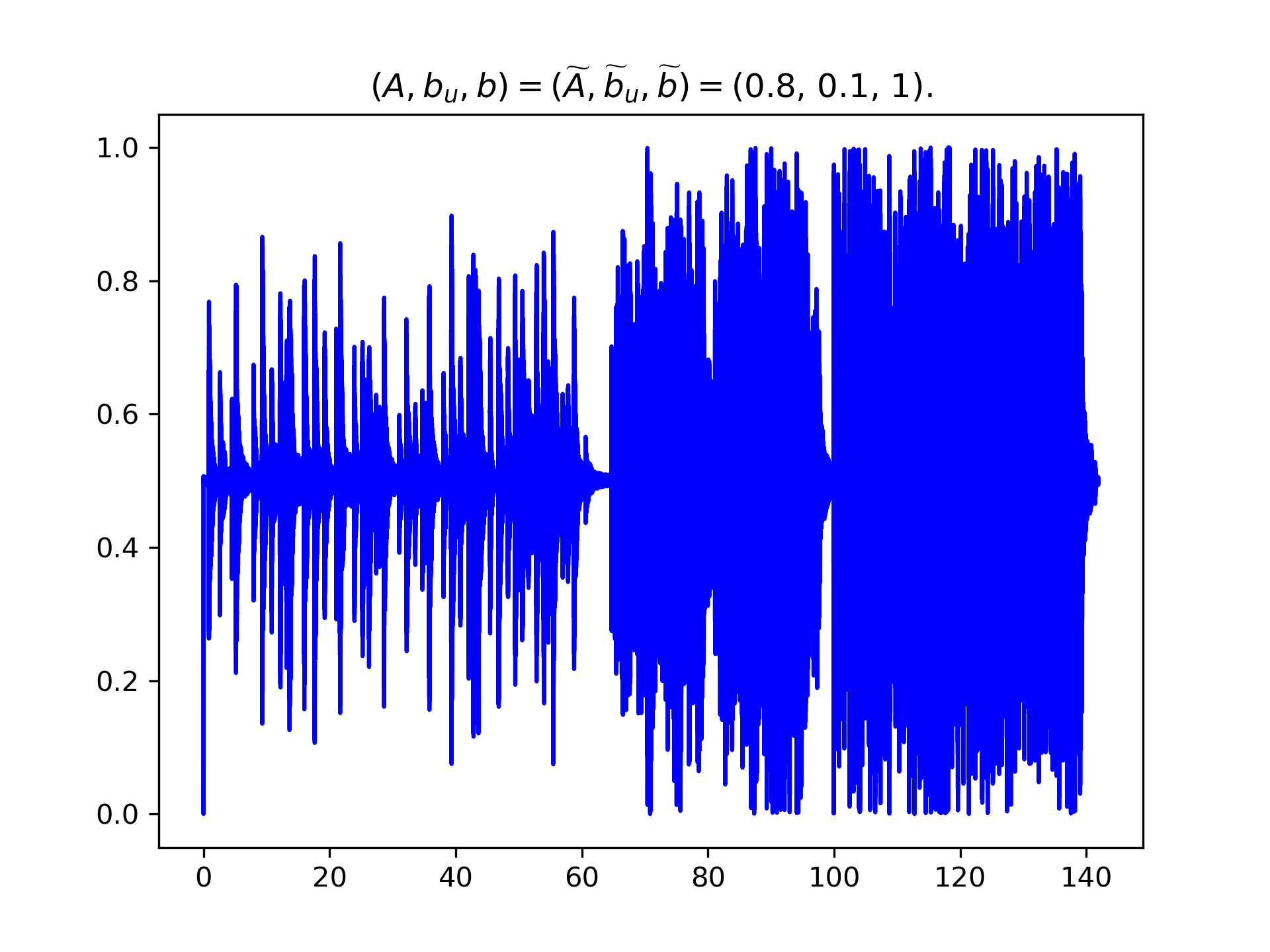
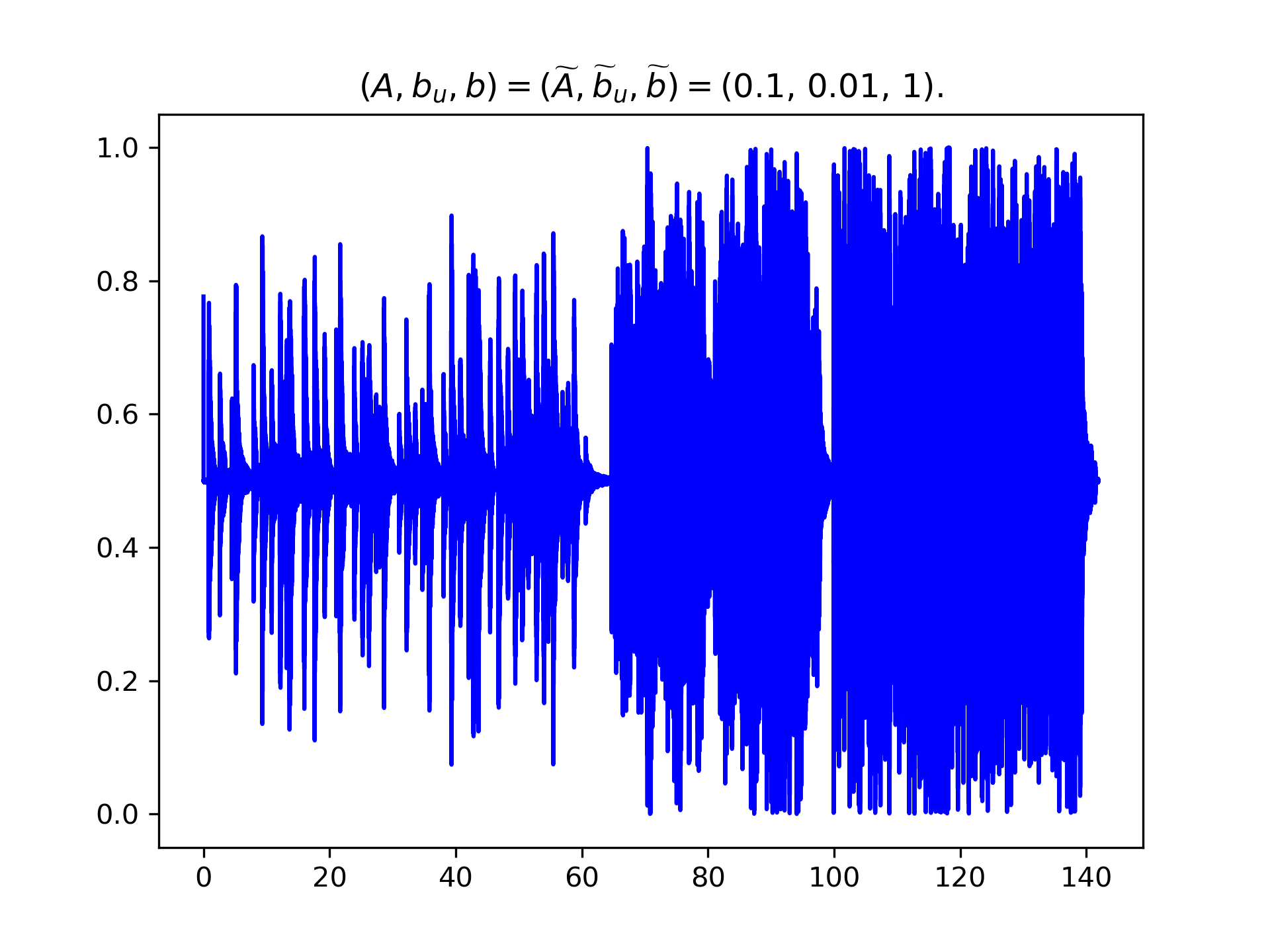
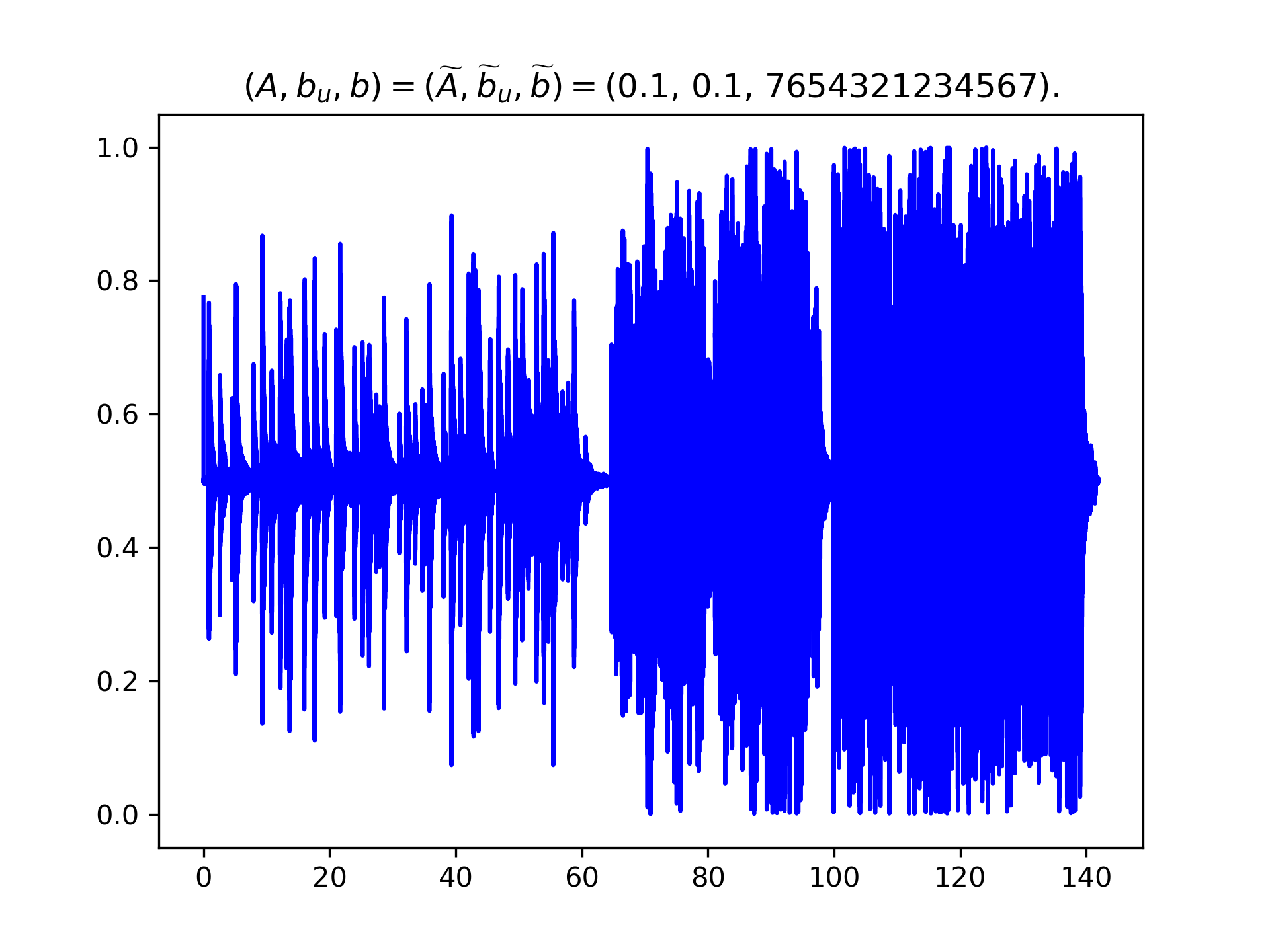
Bob can restore the signal from the 3 concealed signals by CRS because he knows all the secret keys.
 .
For each sets of parameters, Bob obtains the restored signal as
 .
 .
 .
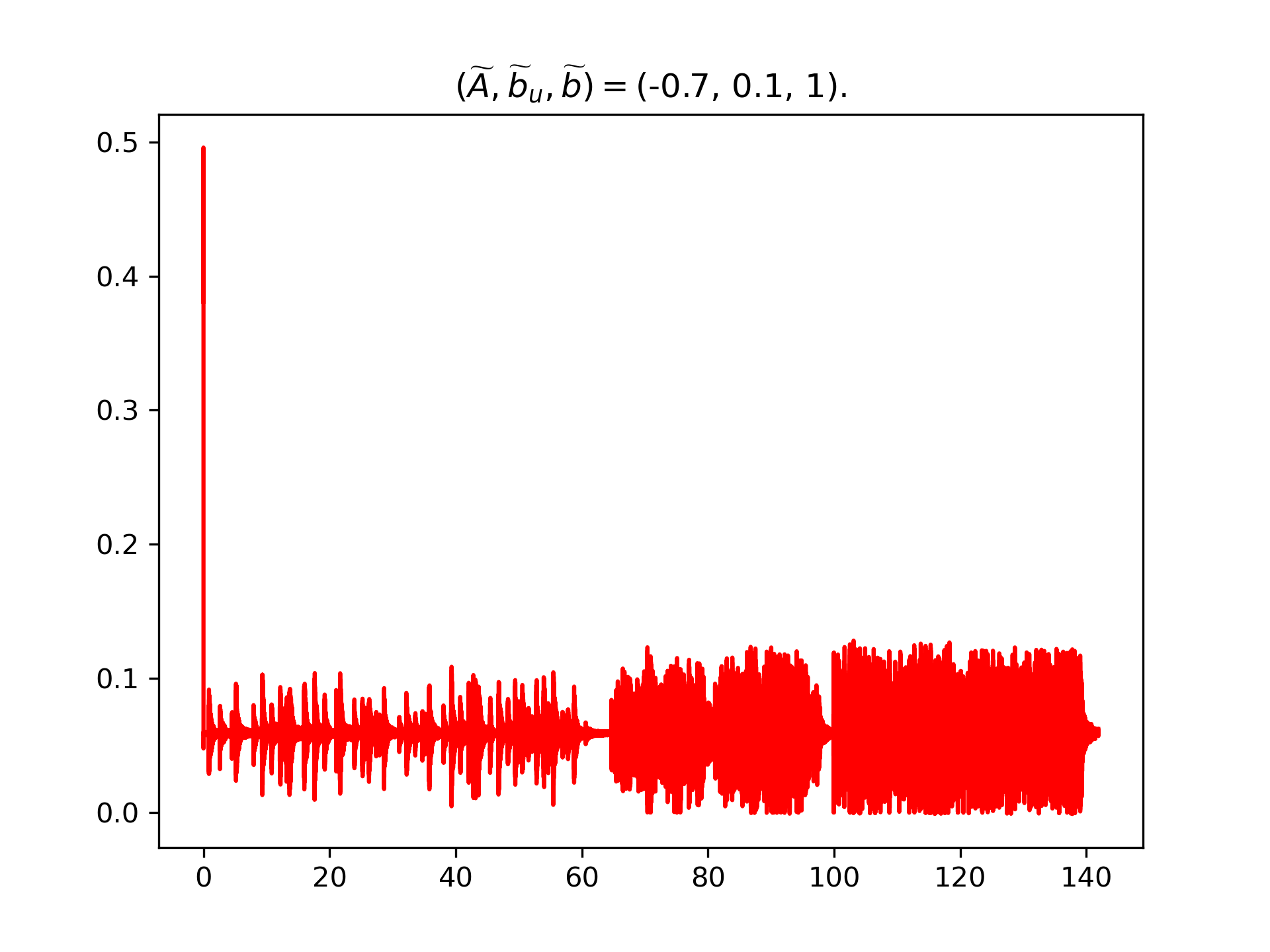
Let us suppose that Eve wants to wiretap the music that Alice sends to Bob, she succeeds in stealing all the 3 concealed signals.
Now, we assume that Eve succeeds in stealing bu and b, but A. The correct secret keys are (0.8, 0.1, 1). Then, she gets the signal with a wrong estimates of A as
 .
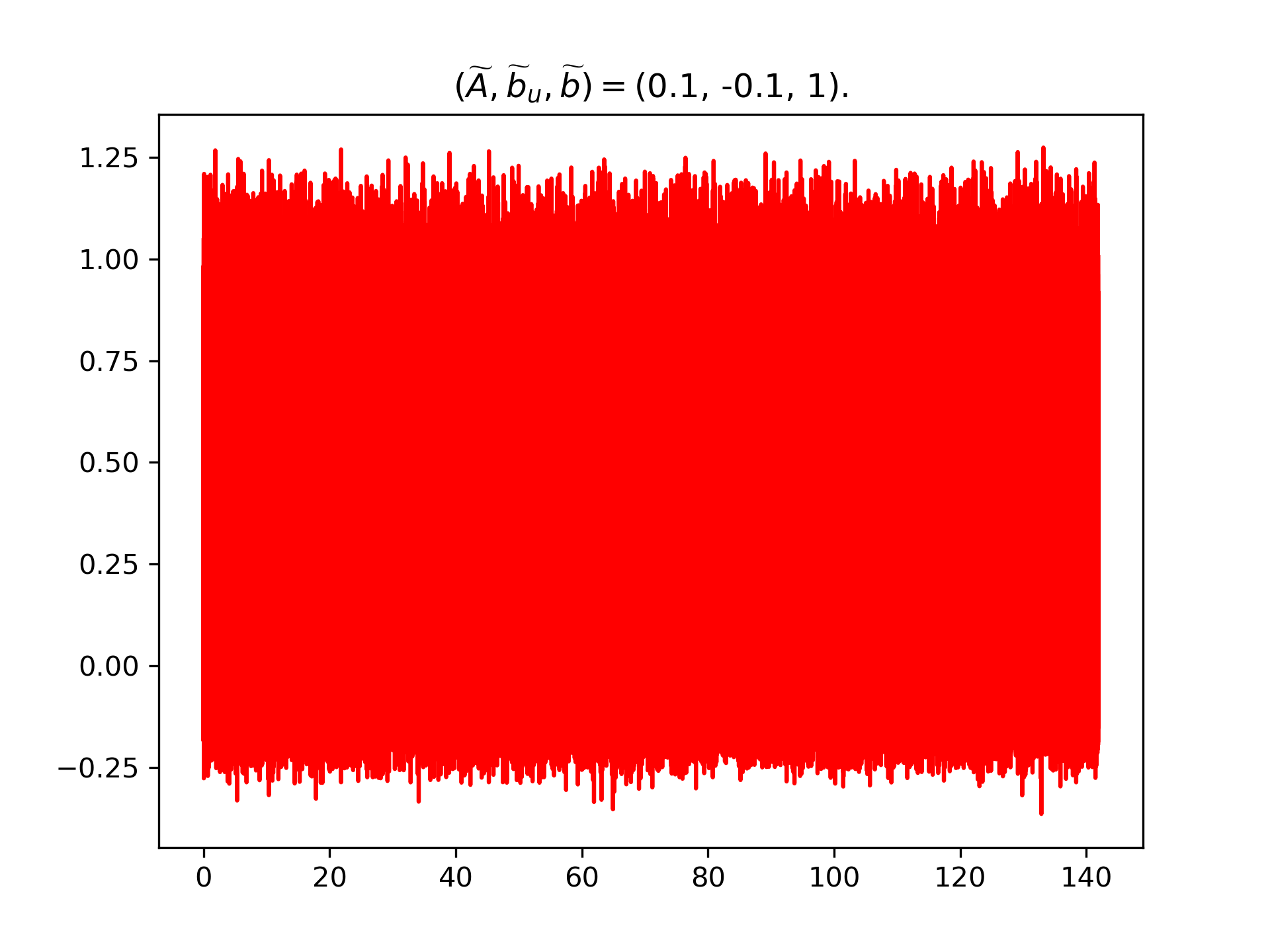
On the other hand, if we assume that Eve gets A and b, but bu. The correct secret keys are (0.1, 0.01, 1). Then, she gets the signal with a wrong estimates of bu as
 .
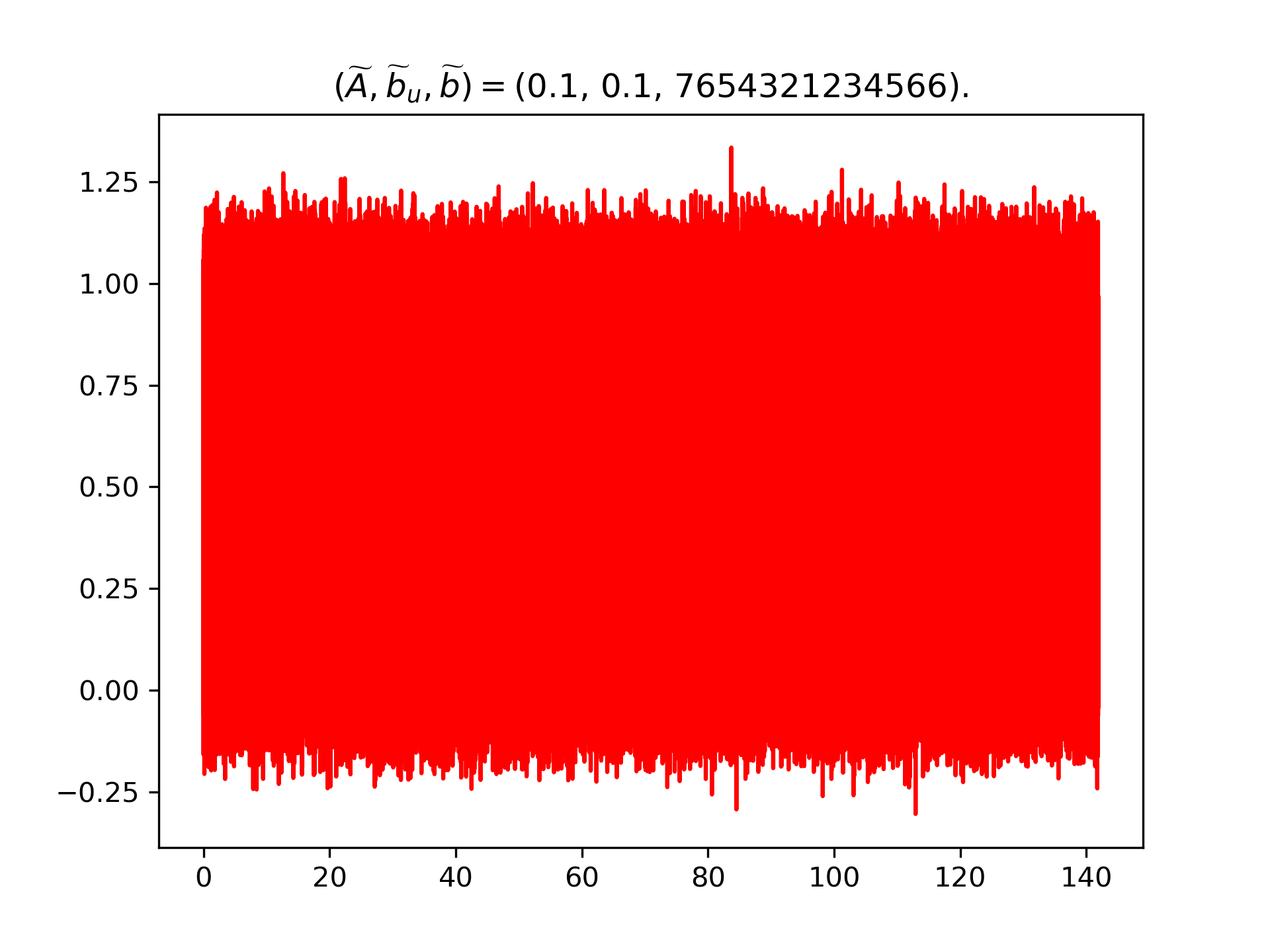
Next, if we assume that Eve gets A and bu, but b. The correct secret keys are (0.1, 0.1, 7654321234567). She has to restore the signal with the wrong 13-digit codes. Then, she gets the signal with a wrong estimates of b as
 .